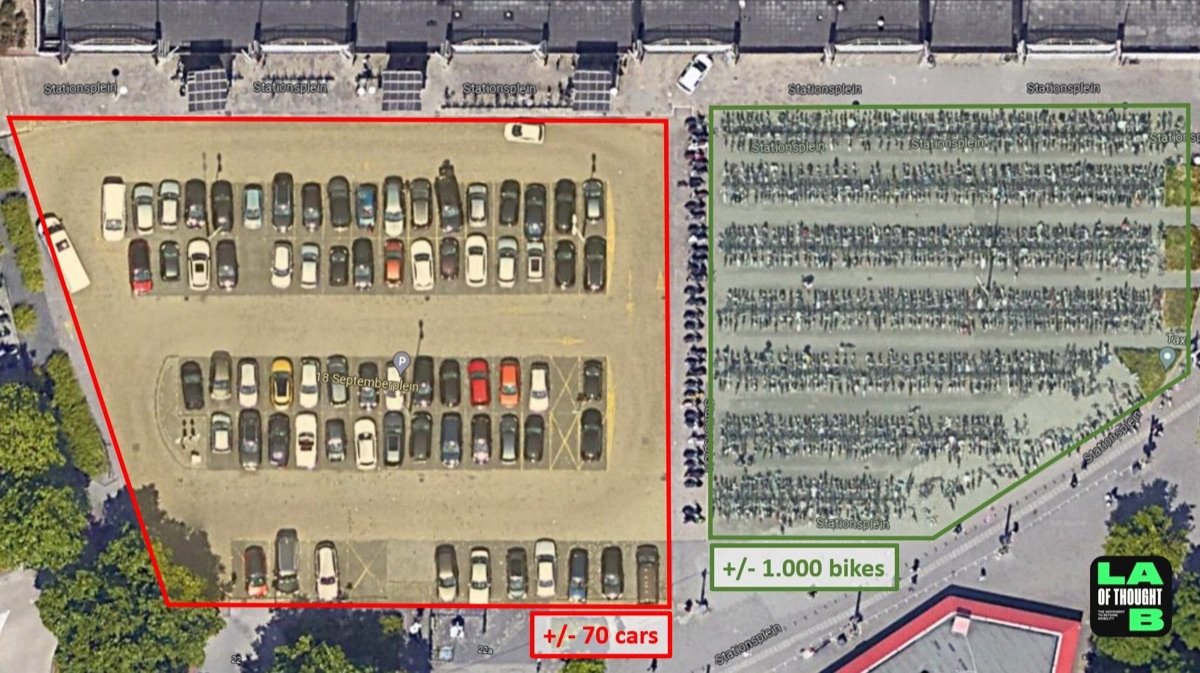
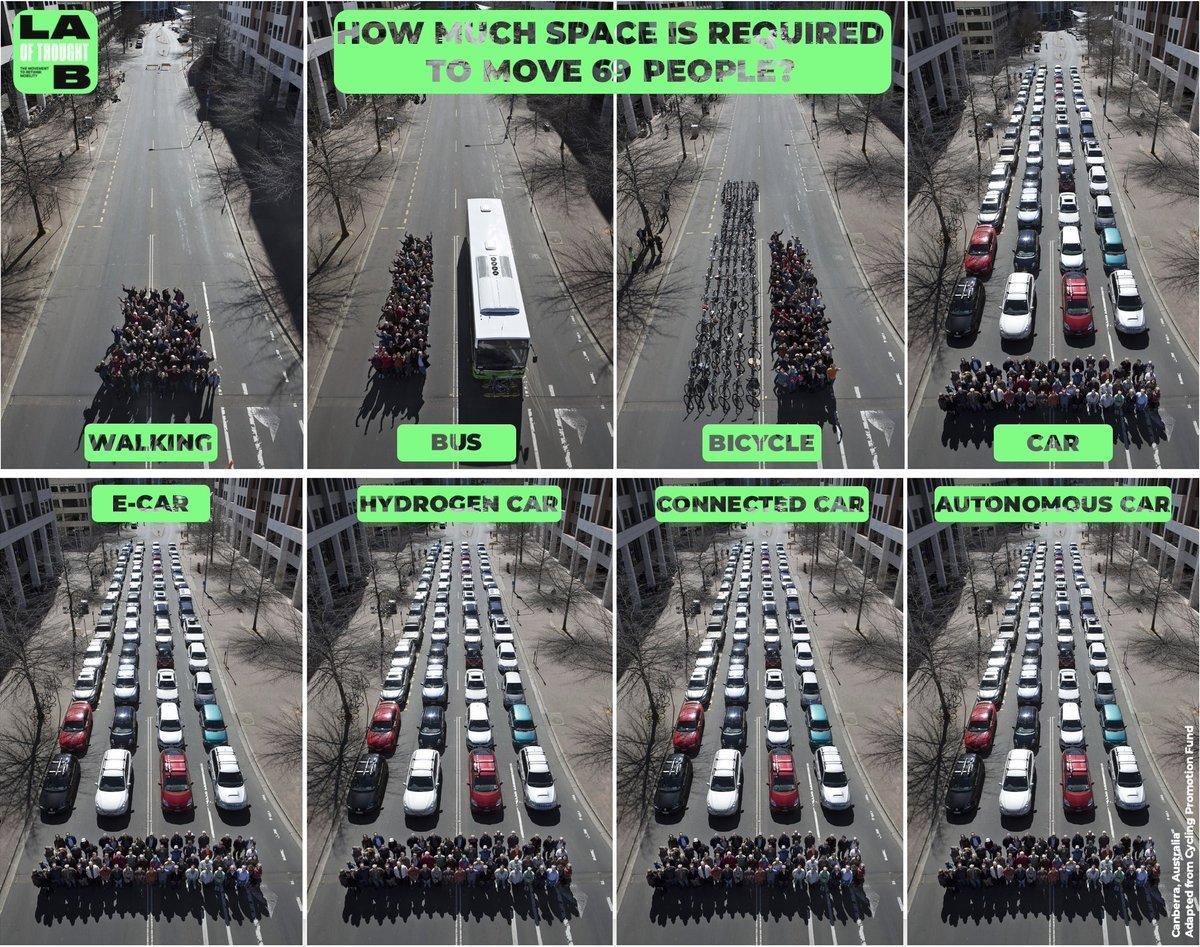
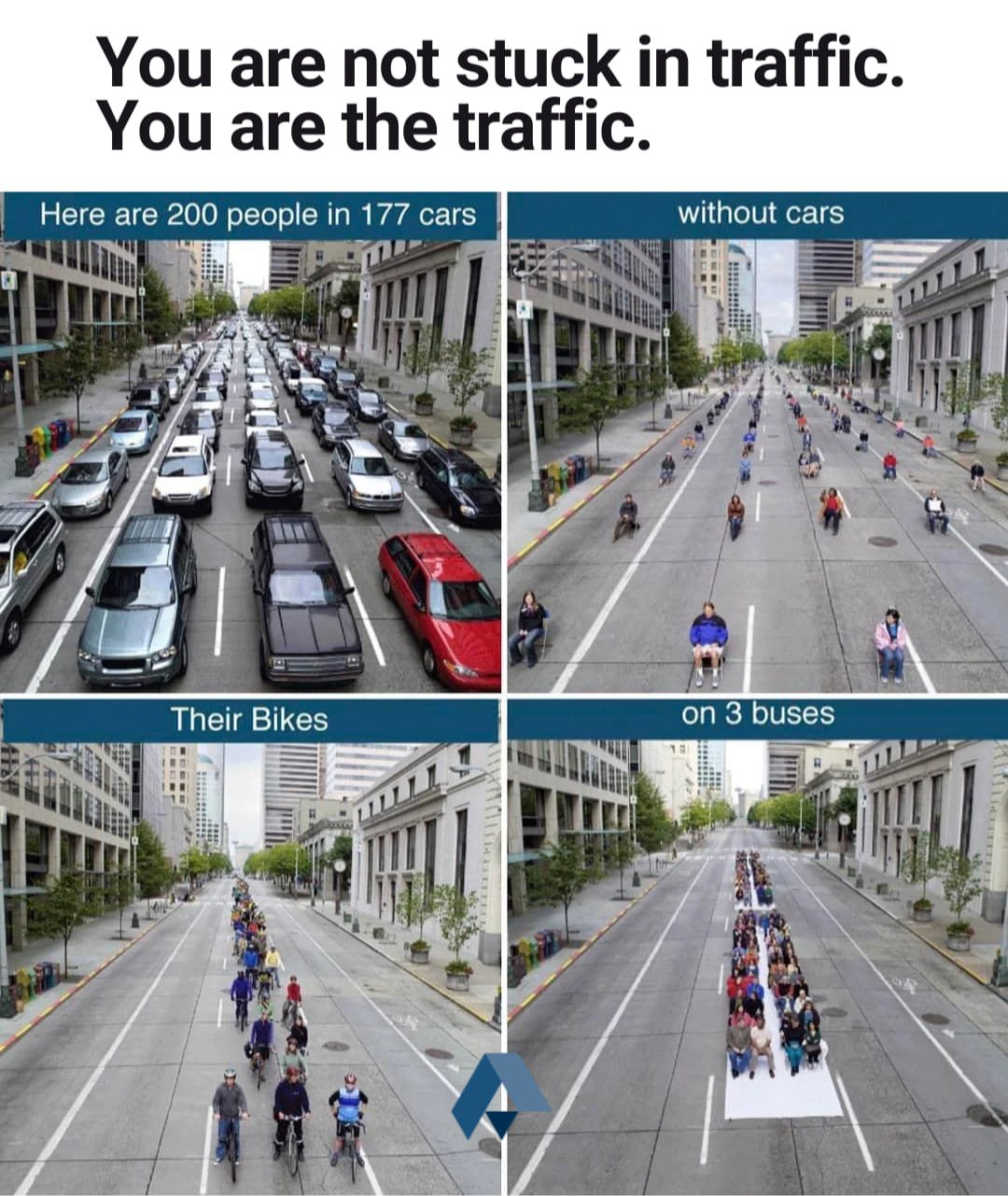
Land is the one thing a city cannot make more of. The car-centric road system spends it on moving and storing 2-ton vehicles. The Physical Internet® moves people and goods overhead on slim piers and gives the street back to people.
One freeway interchange. One historic city center.
These two images are the same scale. A single Los Angeles interchange covers as much ground as the historic core of Florence. One moves cars. The other holds a city.
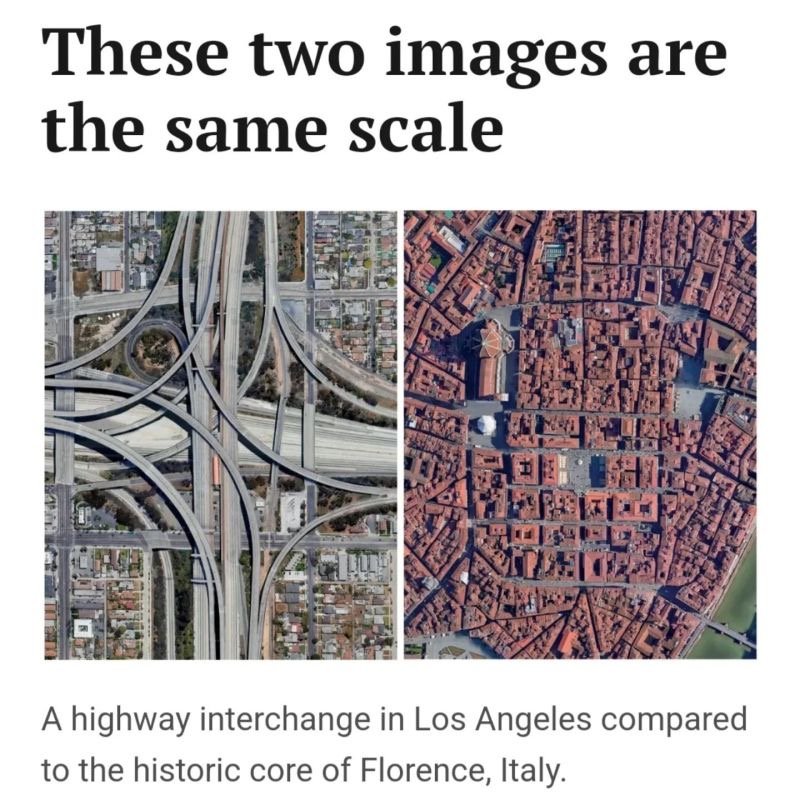
Road: 8,765,578 lane-miles × 12 ft ÷ 273.6 million cars = 2,030 sq ft per car. Parking: 3.4 spaces per car (NRDC) = 612 sq ft. JPods: 32-inch piers about every 100 ft plus one 10 × 40 ft station per mile. Detail: library.jpods.com/landuse.
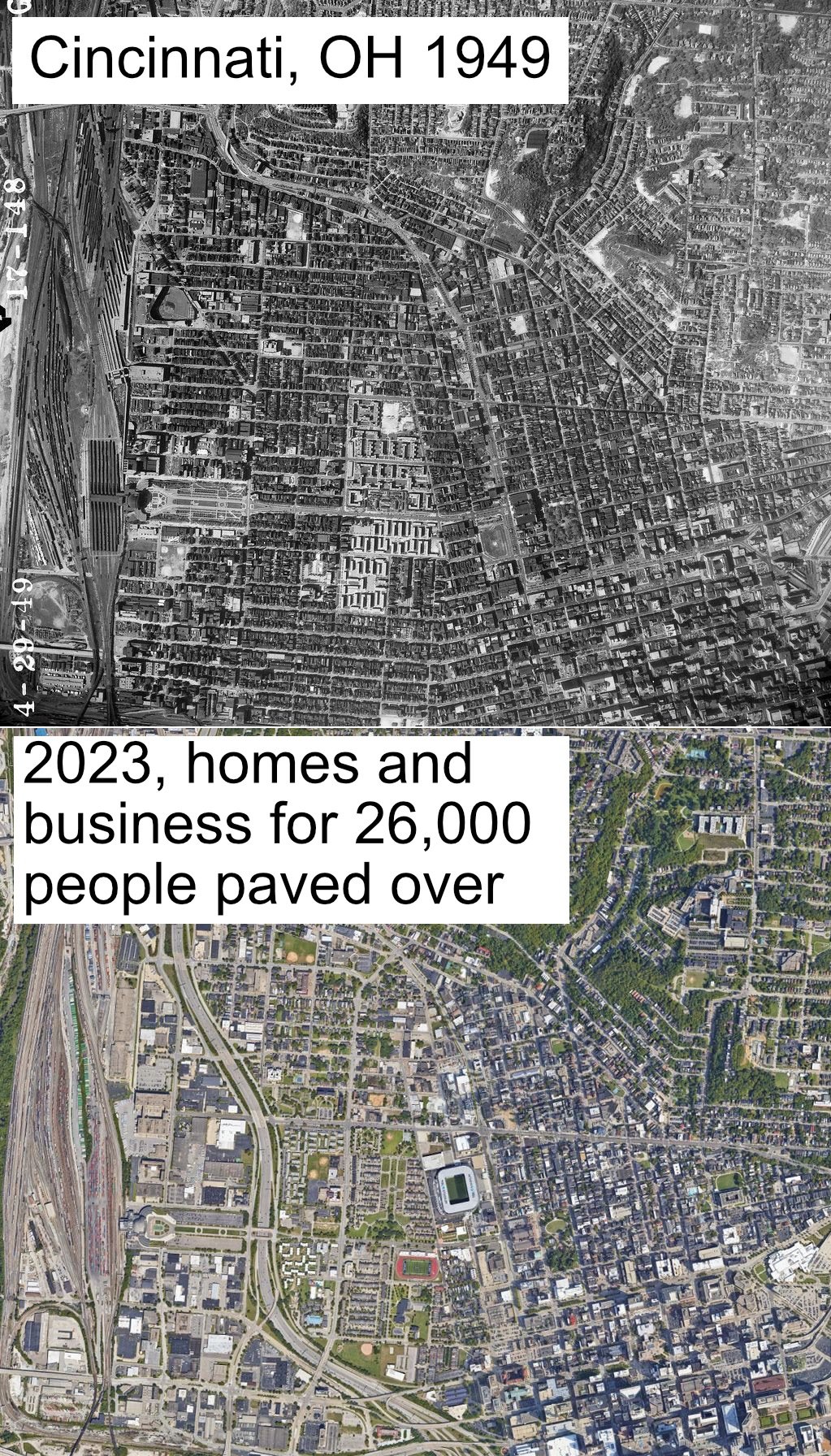
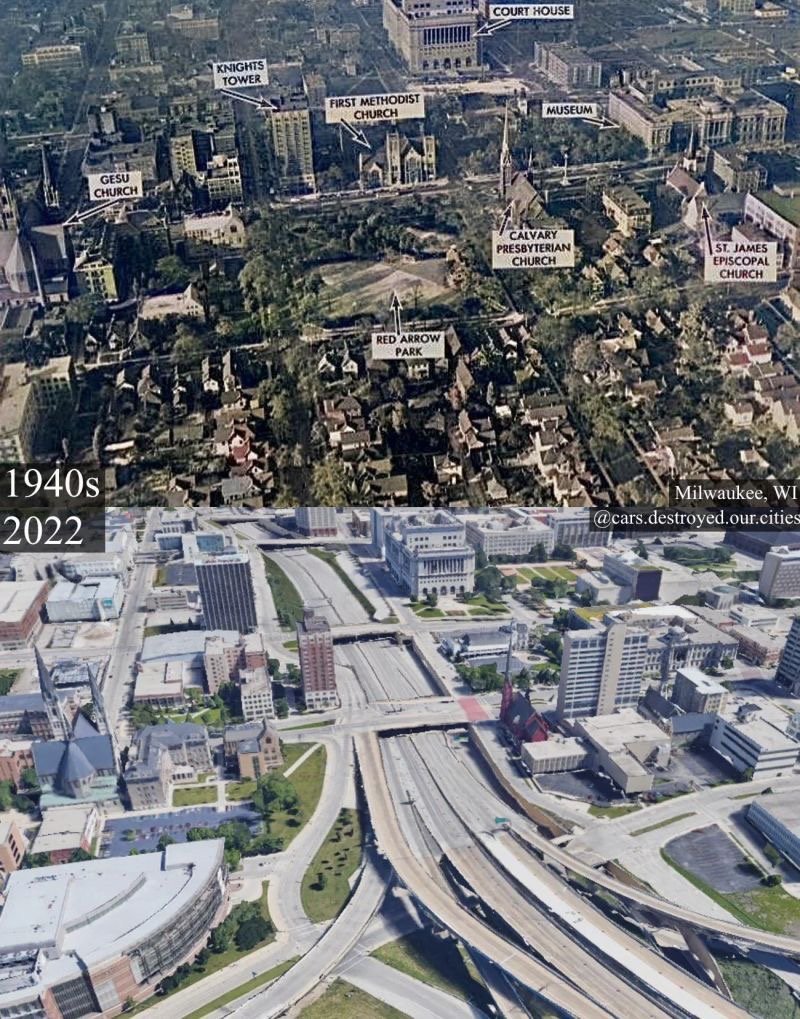
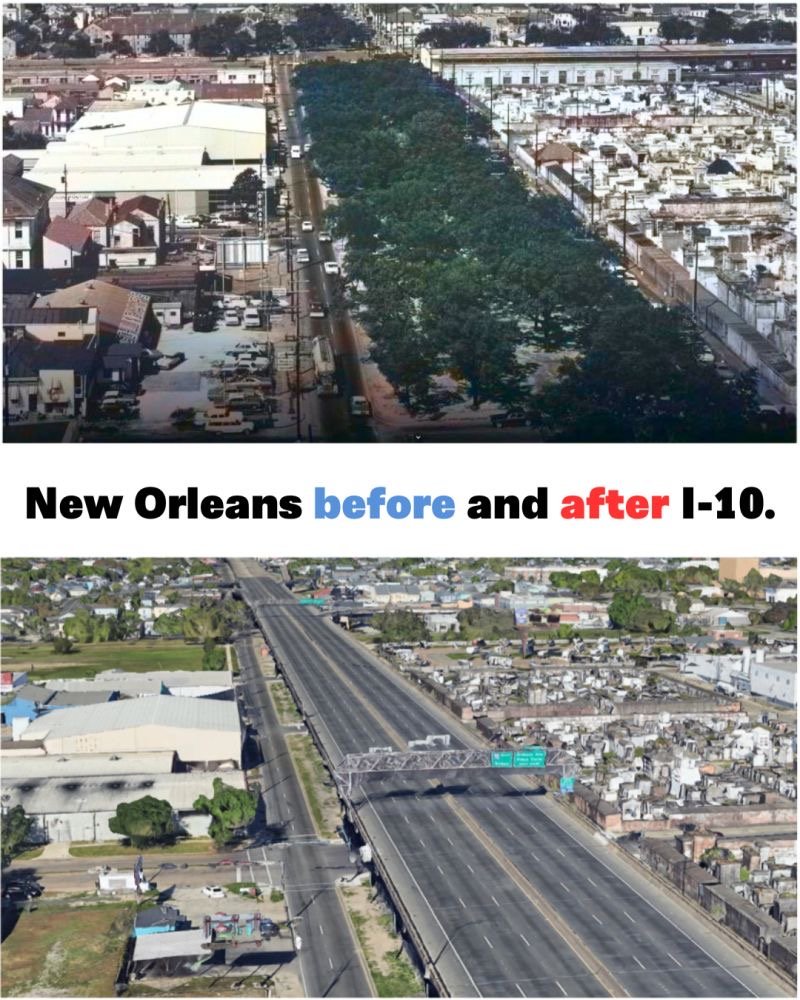
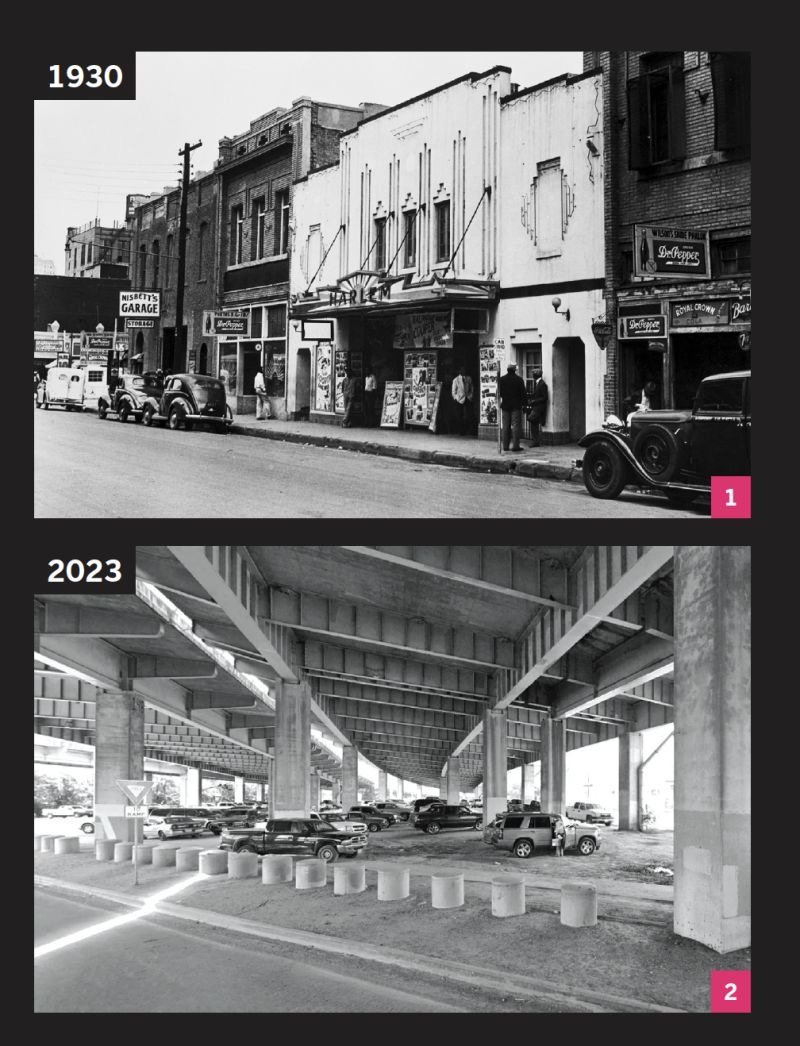
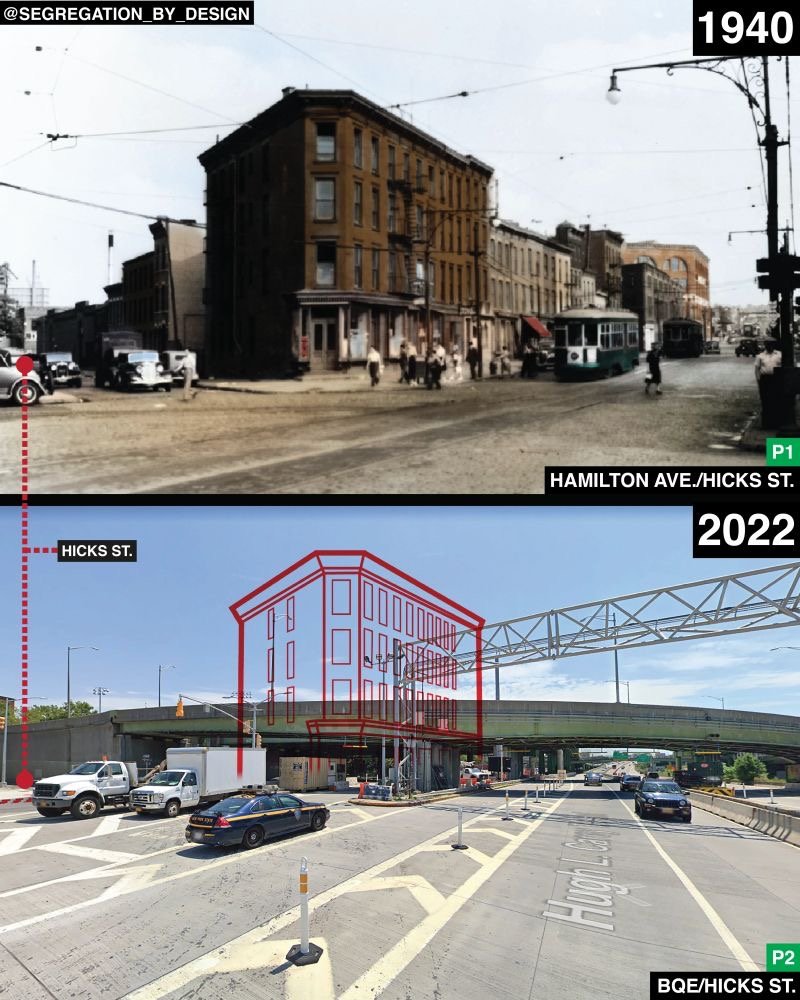
Urban freeways were routed through the densest, poorest and often Black neighborhoods, the places where people lived, worked and shopped on foot. The Bragdon Committee (1957–1959) warned against it and recommended a moratorium on urban Interstates. The warning was ignored.
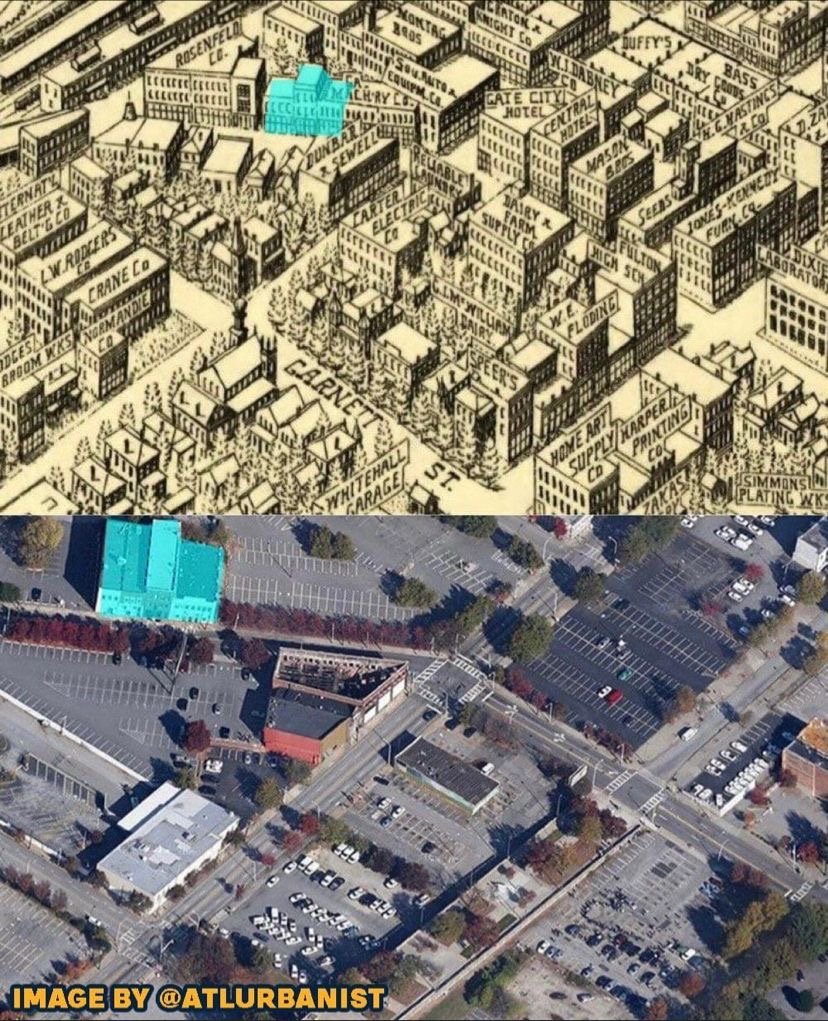
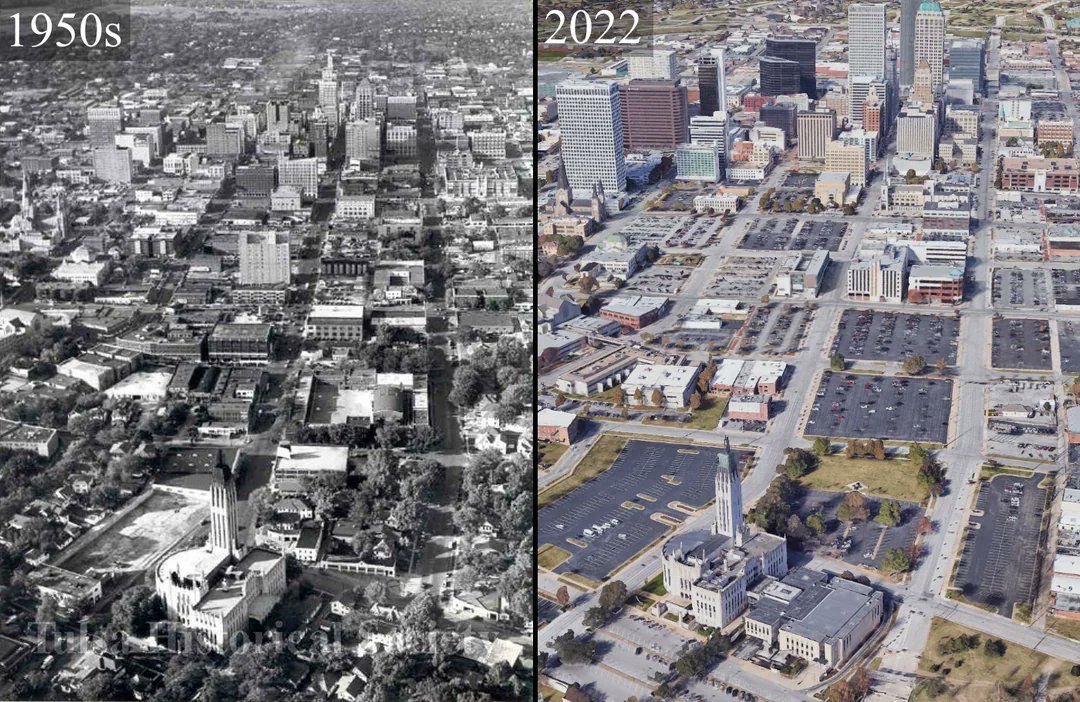
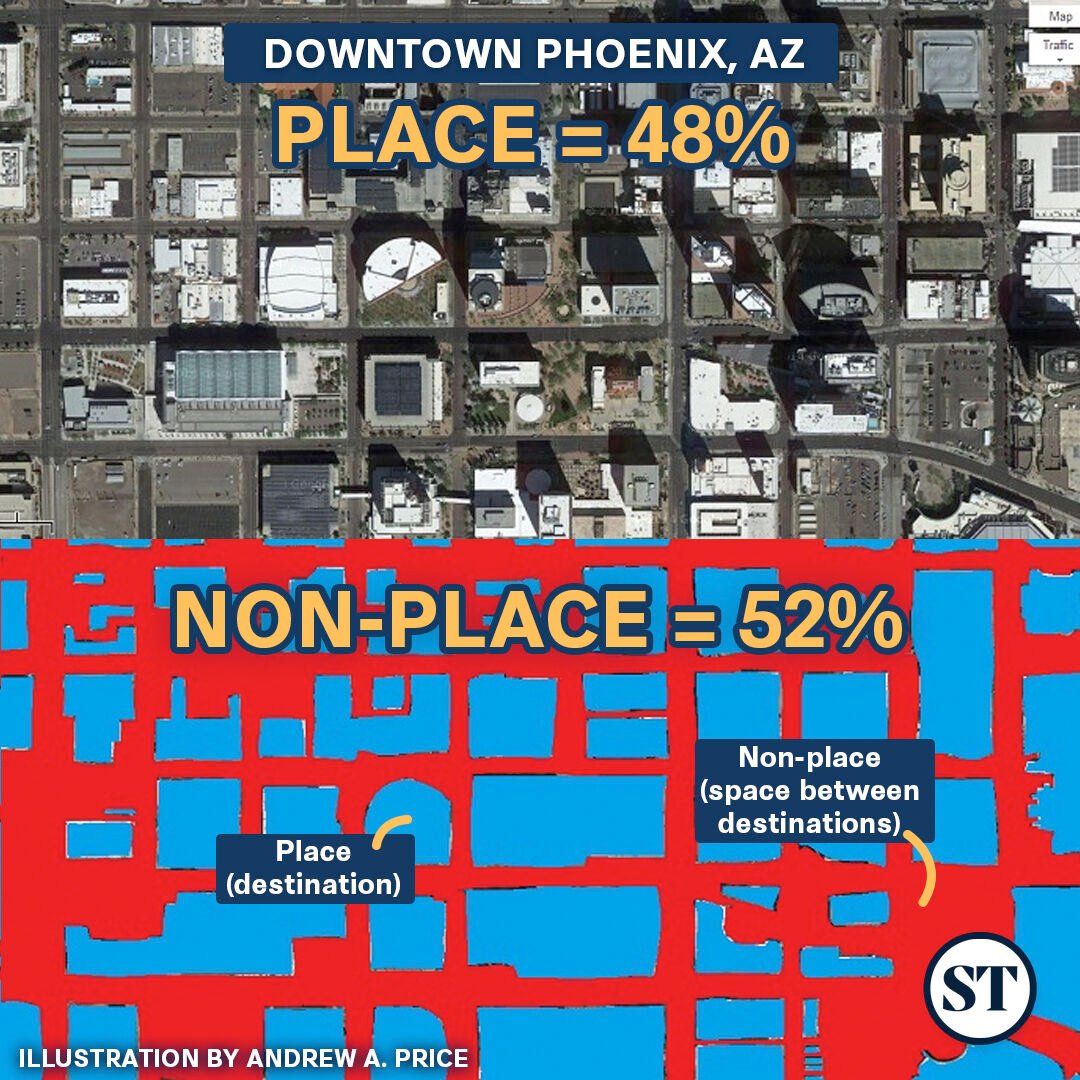
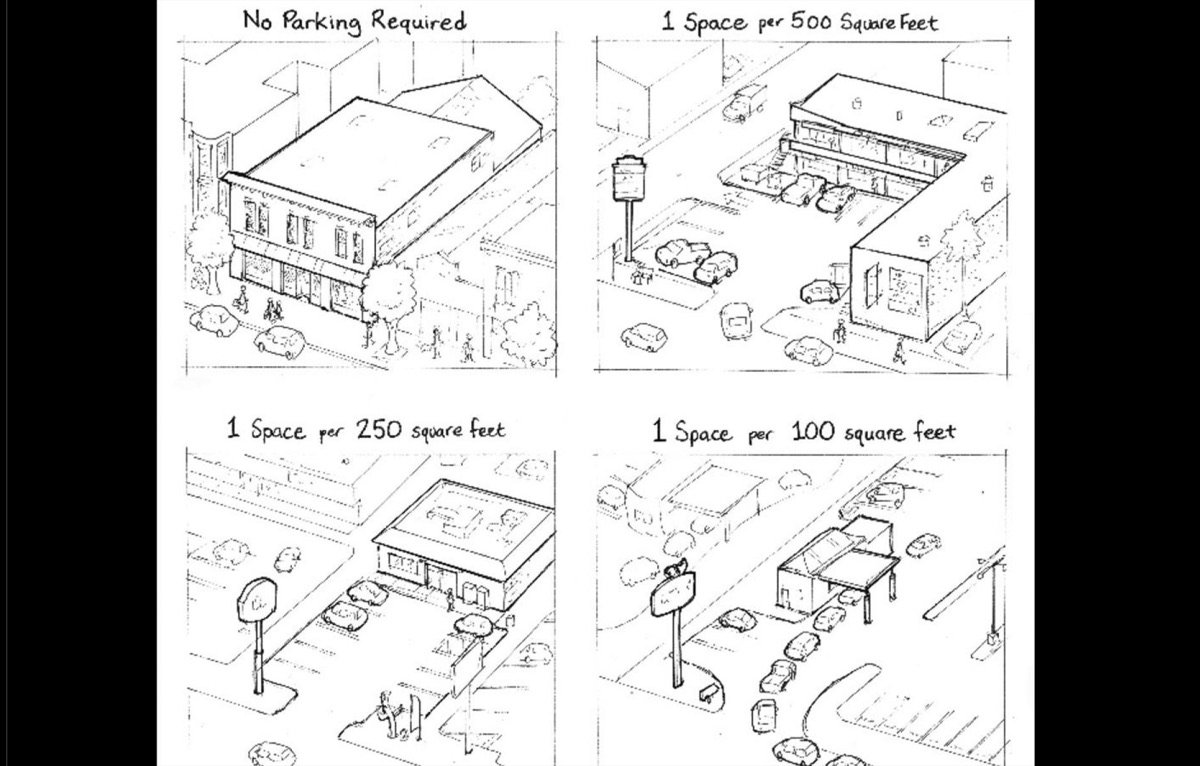
Every car needs a space at home, at work and at every store. Parking minimums wrote that into law. Downtowns that once paid the city's bills became lots that pay almost nothing.
What that costs a city in tax revenue, per acre, is on the Metrics page.
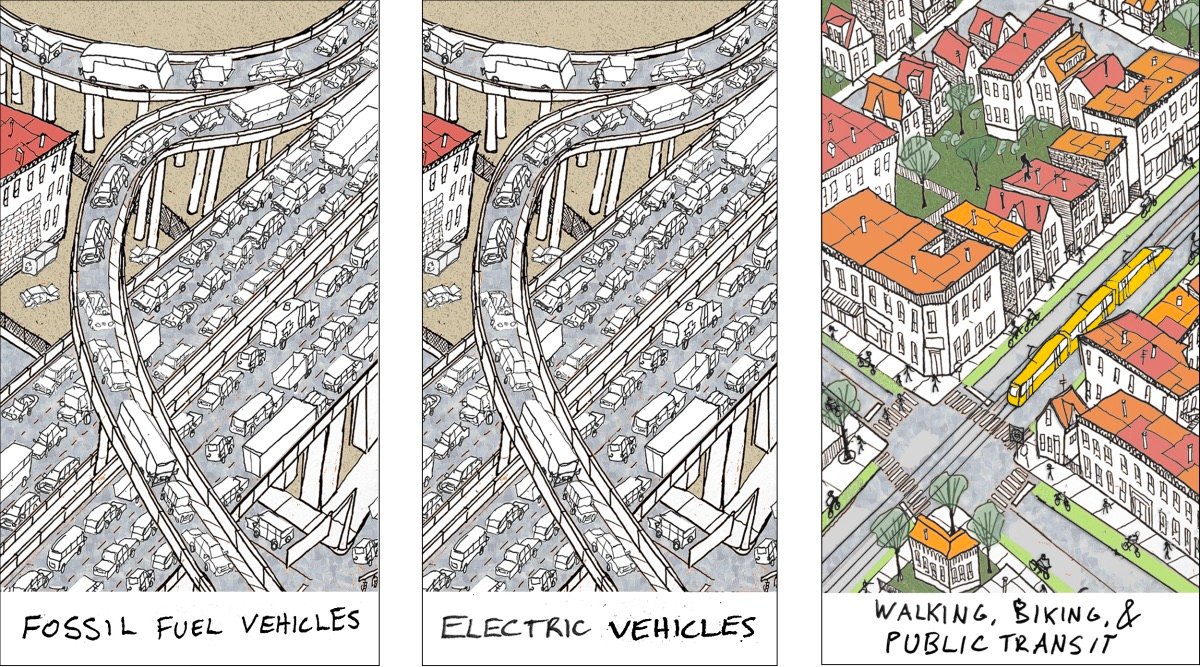
The problem is not the fuel. It is the packet size: a 2-ton vehicle carrying one person. Electric, hydrogen and self-driving cars all take the same road and the same parking. A JPods pod carries up to 500 kg overhead, and the street below stays open.
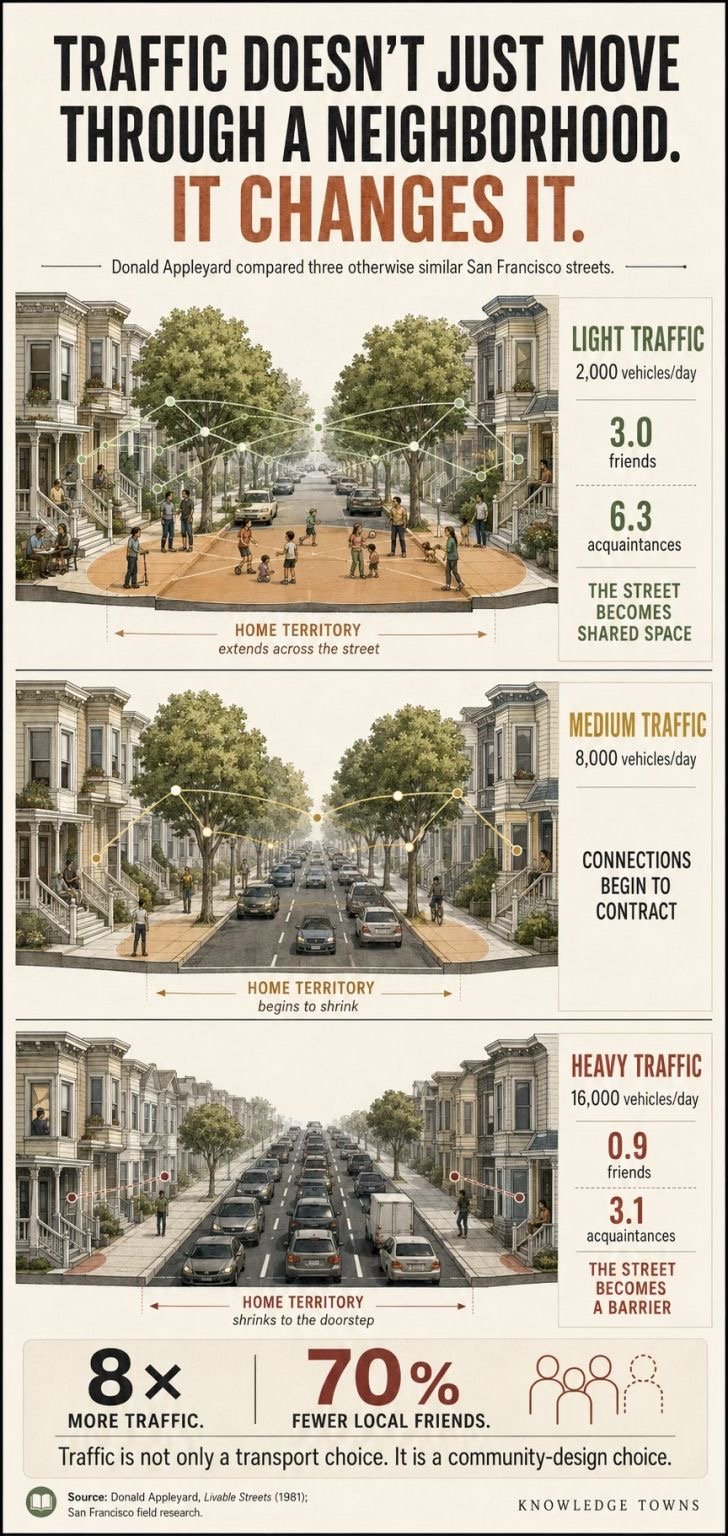
8× the traffic. 70% fewer friends.
Donald Appleyard studied three San Francisco streets. Residents of a street with 2,000 vehicles a day had 3.0 friends on the street. Residents of a street with 16,000 vehicles a day had 0.9. Heavy traffic cuts a neighborhood in half and people stop knowing each other.
Donald Appleyard, Livable Streets (University of California Press, 1981).
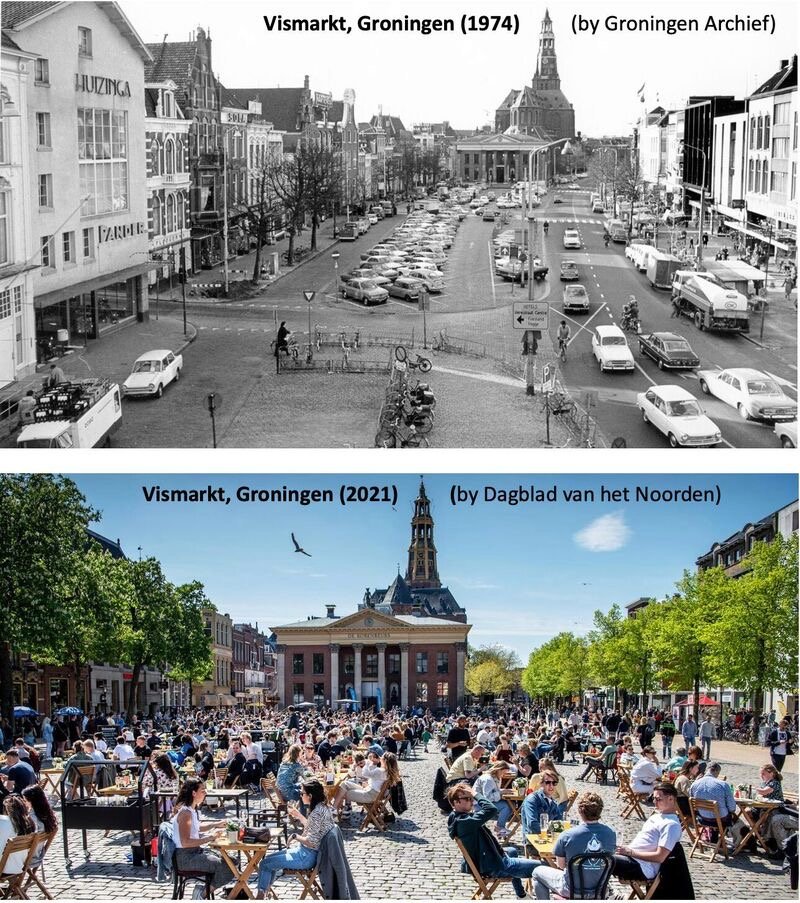
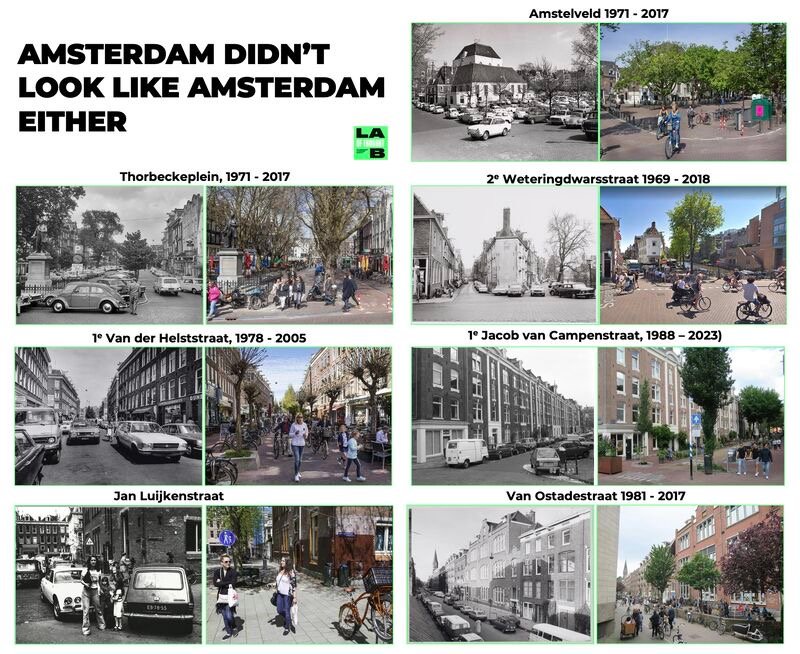
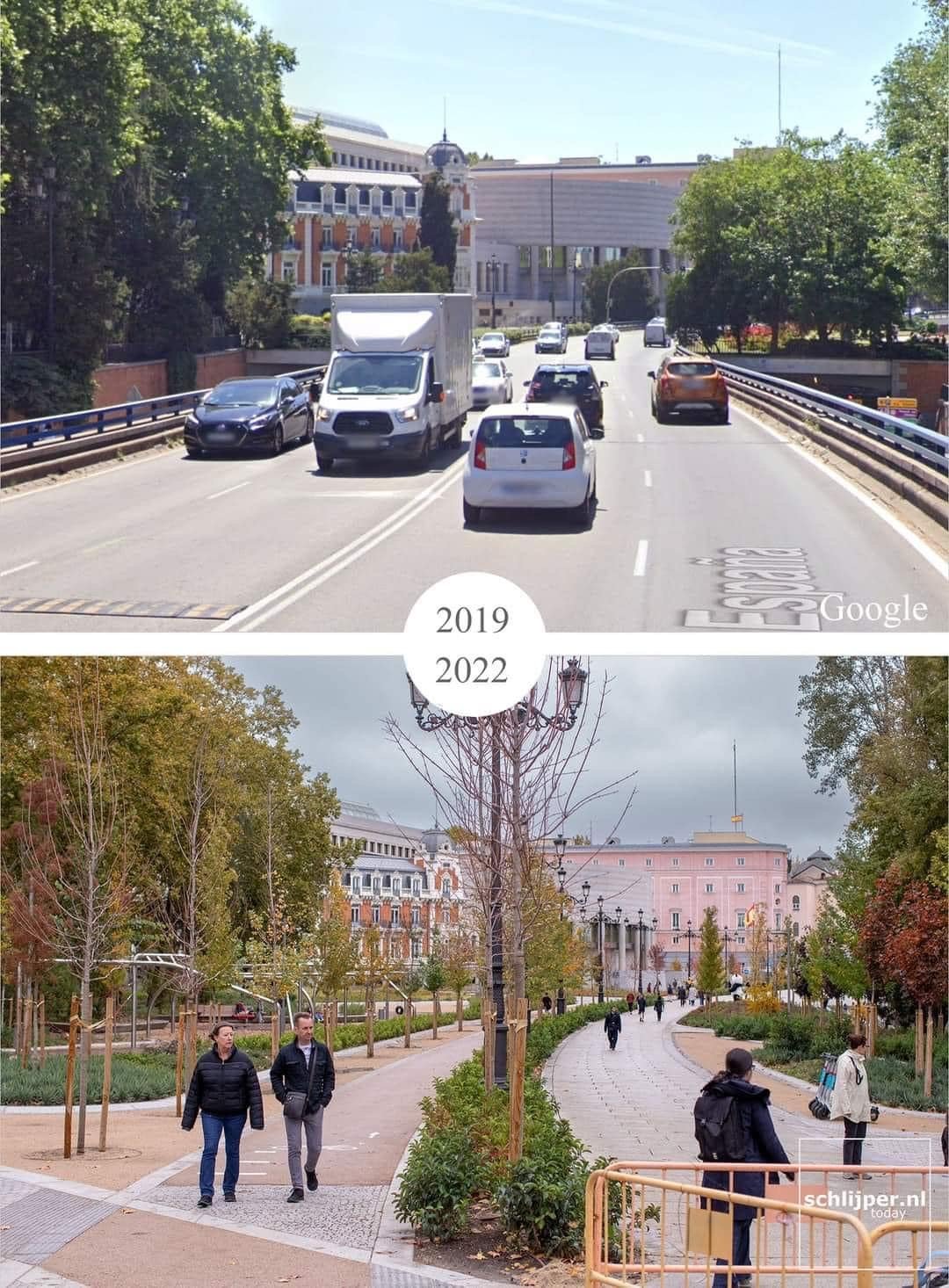
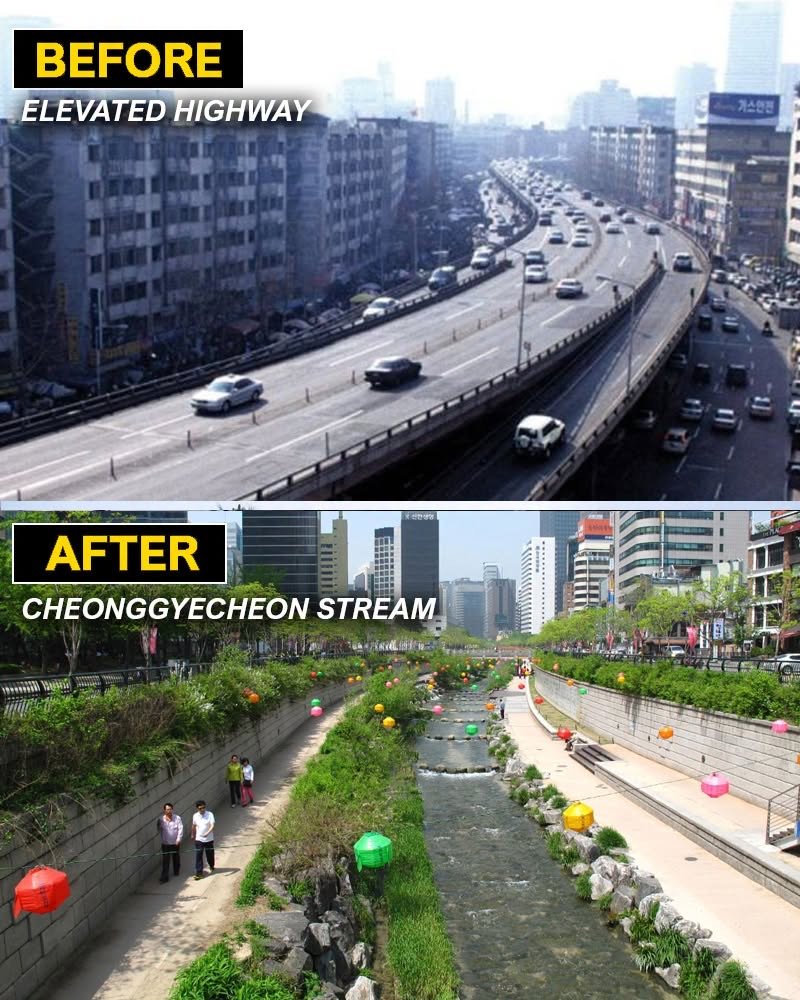
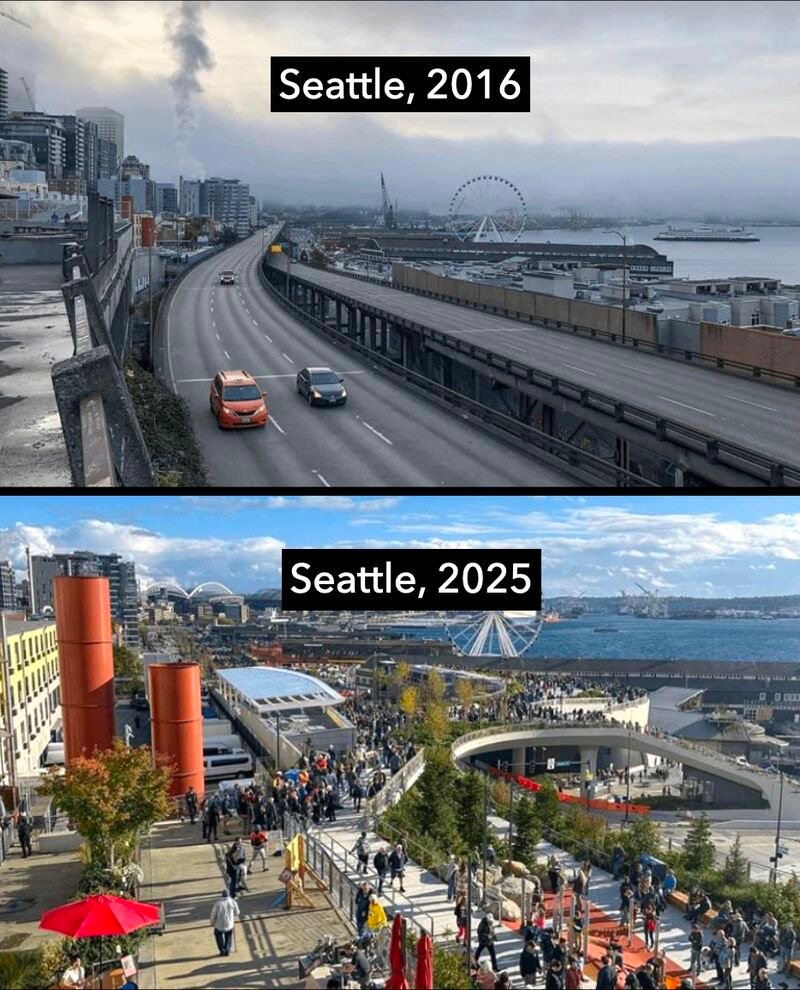
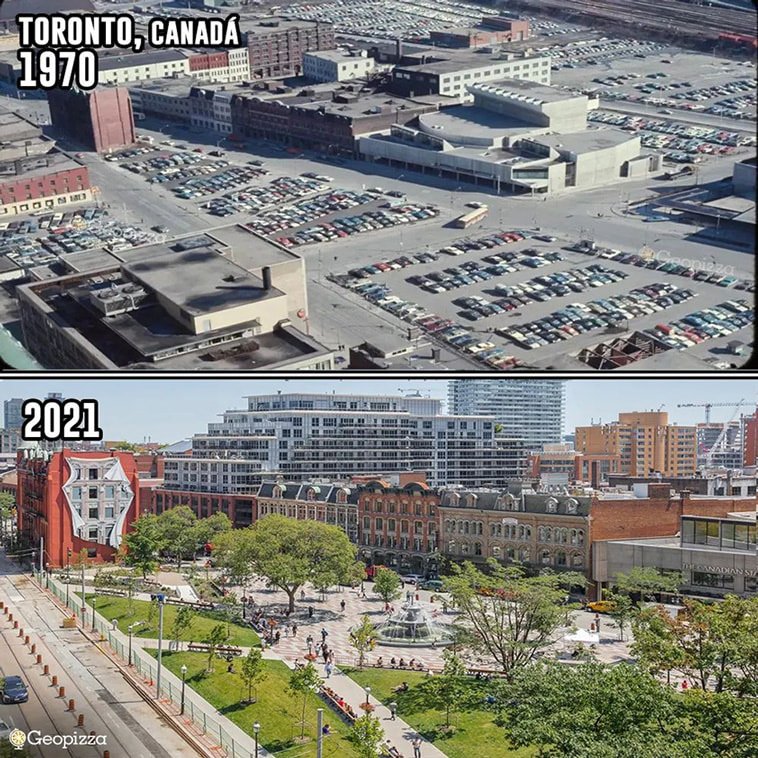
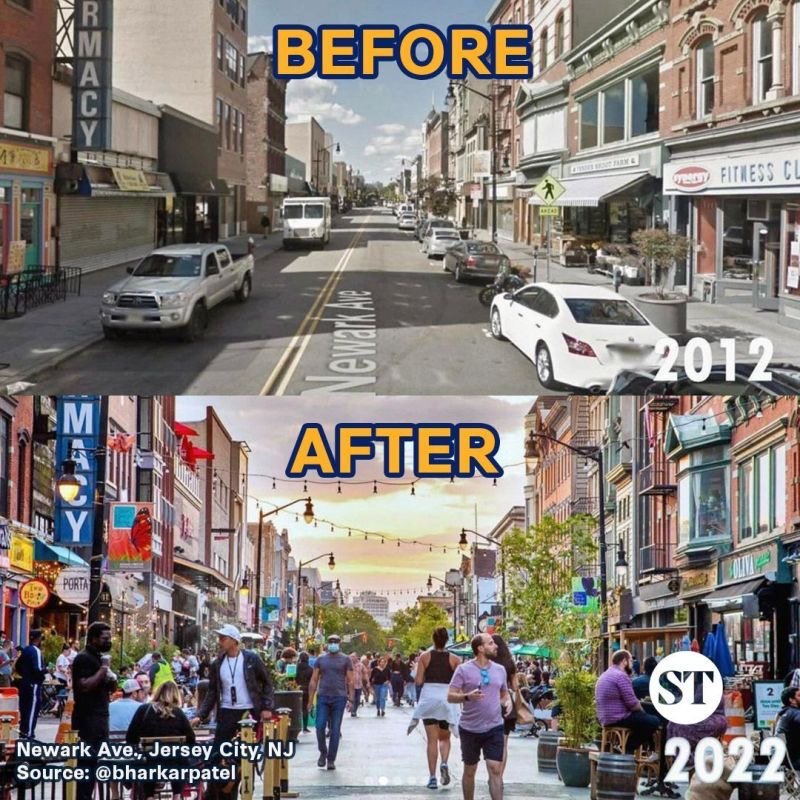
Each pair below turns “we can’t” into “they did.”
Squares, streets and waterfronts taken by cars have been taken back, in years, not generations. The land is still there under the asphalt.
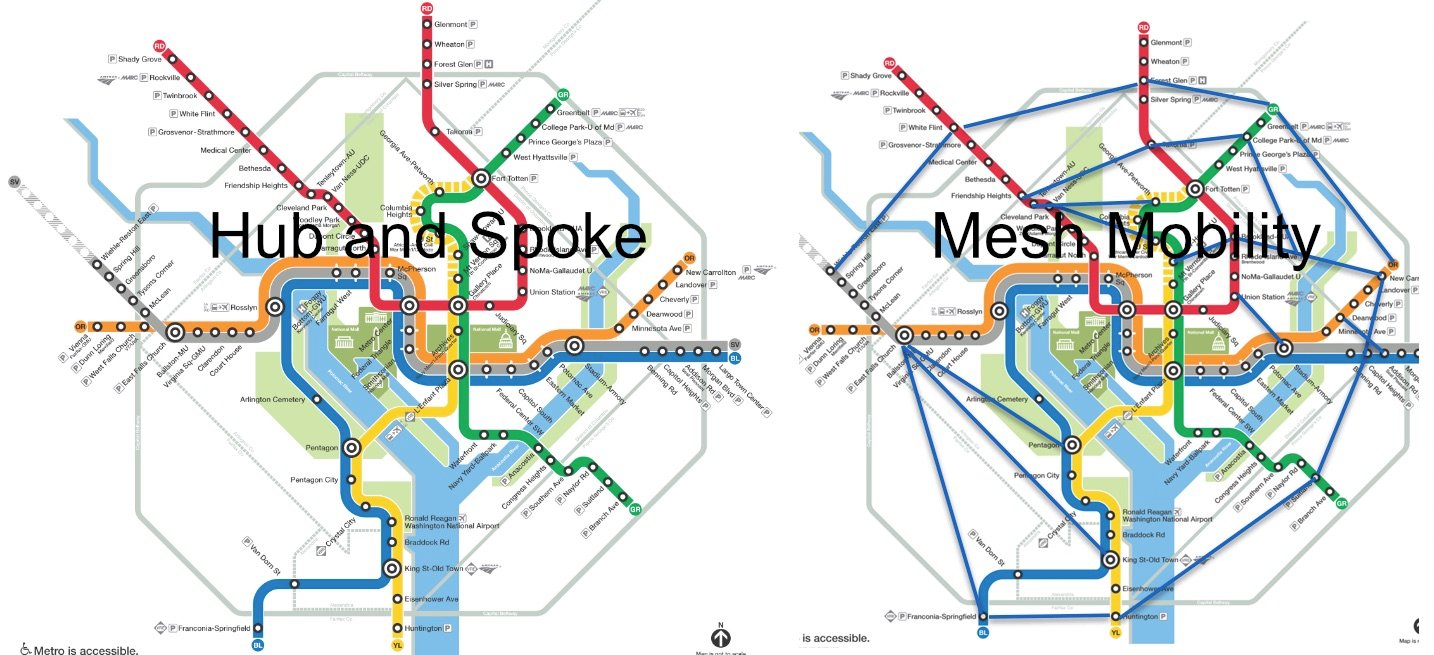
Taking land back from cars only works if people can still get where they are going. A hub-and-spoke system forces trips through the center. A mesh connects every station to its neighbors, so the last mile shrinks to a short walk or bike ride.
Network value increases exponentially as the number of interconnected nodes increases and the packet size is driven toward one.
Energy per passenger-mile, tax revenue per acre, the cost of traffic and the cost of each car.